Dog Won't Come When Called? Building a Reliable Recall
August 30, 2026

Quick Answer: A dog that ignores "come" usually hasn't been taught that the word is worth responding to yet — not that she's stubborn or untrainable. Reliable recall is built in stages: make your cue genuinely exciting indoors with zero distractions first, then practice at short distances on leash, then move to a long line in low-distraction outdoor spaces, and only then start layering in real-world distractions one at a time. Every recall, even a slow one, has to end in something the dog wants. Never a bath, a nail trim, or the end of playtime. Skip the long-line stage and let a dog off leash too soon, and the training usually falls apart the first time a squirrel crosses the yard.
You're standing in the middle of a Chicago dog park, calling your dog's name while she sniffs a fence post like you don't exist. Sound familiar? Most dogs in that moment aren't being defiant. They've just never been taught, in any structured way, that coming back to you beats whatever they're currently doing. That's a training gap, not a personality flaw — and it closes with the right sequence of steps.
Why Dogs "Know" Come But Still Don't Do It
A dog that sits reliably in your kitchen but blows off "come" at the lakefront hasn't actually learned recall. She's learned to sit in the kitchen. Dogs don't generalize behavior across locations and distraction levels the way people assume they will. Training a cue in one quiet room doesn't automatically transfer to a busy sidewalk, a dog-friendly forest preserve, or an off-leash area packed with other dogs and squirrels.
Three things usually explain the gap. The cue got "poisoned" somewhere along the way — if "come" has ever preceded something your dog didn't enjoy, like the end of a game at the park, a bath, or being crated and left alone, she's quietly learned that responding to the word carries a cost. Dogs are remarkably good at that kind of pattern recognition, even when you never meant to teach it.
The reward isn't competing with real life, either. A stale treat or a half-hearted "good boy" isn't going to out-compete a squirrel or the smell of something interesting in the grass. Recall only works when what the dog gets for coming is better, in her opinion, than what she was doing.
And the dog was probably pushed to off-leash too early. Skipping the on-leash and long-line stages and heading straight to open space is the single most common reason recall training collapses. Without a way to stop the dog from practicing "ignore the human, do something else instead," that habit gets rehearsed and reinforced every time it happens.
Start With Name Recognition and Attention
Before recall means anything, your dog needs a rock-solid response to hearing her name — turning toward you, making eye contact, every single time. Sounds basic. It's the foundation everything else gets built on.
Say your dog's name once, in a calm and upbeat voice. The instant she looks at you, mark the moment with a word like "yes" and hand over a high-value reward. Repeat this in short sessions throughout the day, in different rooms of the house, until her head snaps toward you the moment she hears her name — not eventually, immediately. This groundwork should feel almost too easy before you move on. If your dog is still slow to check in indoors with nothing else going on, she isn't ready for recall practice outside yet.
Charge the Recall Cue Before You Ever Use It Outdoors
Once name recognition is solid, it's time to "charge" your actual recall word, whether that's "come," "here," or something else entirely. Charging means building such a strong positive association with the word that your dog's ears perk up the second she hears it — before she's ever asked to do anything difficult in response.
Say the cue in a warm, happy tone and immediately follow it with a top-tier reward, something reserved only for this purpose: small pieces of chicken, cheese, a favorite squeaky toy. Do this dozens of times over several days in a boring, distraction-free space. You're not asking your dog to come from across the room yet. You're teaching her that the sound of that word predicts something wonderful.
Kibble and everyday biscuits work fine for practicing "sit" in the living room. Recall is different — it has to compete with real-world distractions, so the reward needs to be worth more to your dog than whatever she'd rather be doing. Save the good stuff exclusively for recall practice so it keeps its value.
Practice Short-Distance Recalls On Leash First
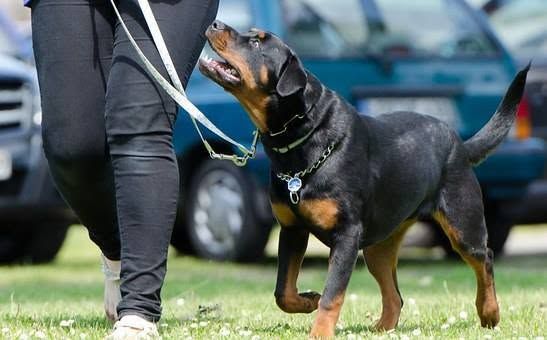
With the cue charged, start asking for actual recalls, but only at short, easy distances, and always on a standard four- to six-foot leash. Let your dog wander a few feet away while sniffing or exploring, then say her name, wait for the head turn, and give the recall cue in that same cheerful tone. When she reaches you, reward generously and make a genuine fuss over her arrival.
Keep every session short and upbeat. End it before your dog gets bored or distracted. A handful of joyful, successful repetitions beats a long session that ends in frustration for either of you. As your dog strings together consistent wins at three or four feet, stretch the distance gradually — five feet, then ten, then further down a hallway or across a quiet backyard.
Move to a Long Line Before You Ever Go Off Leash
This is the step most owners skip, and it's the one that makes or breaks a reliable recall. A long line — a lightweight leash typically 20 to 50 feet long, never a retractable leash — lets your dog range further away and experience real distance and mild distraction while you still have a physical way to guide her back if she blows off the cue.
Practice in a quiet, safely enclosed space first: a fenced yard, an empty tennis court, a low-traffic corner of a park early in the morning. Let your dog explore to the end of the line, then call her. If she comes on her own, celebrate and reward big. If she hesitates or gets distracted, use gentle pressure on the line to guide her toward you rather than dragging her in. The goal is to help her succeed and still get rewarded for choosing to come — not to make coming feel like a punishment.
Only once your dog is reliably responding on the long line, across multiple sessions and multiple locations, does it make sense to think about off-leash recall in a securely fenced area. Rushing this stage is the number one reason recall training falls apart the first time it actually matters.
Warning: Never call your dog to you for something she'll dislike — nail trims, being put in a crate and left alone, ending a fun play session, or any kind of correction. If coming to you sometimes means something unpleasant happens, she'll start hesitating on every recall, including the ones that matter for her safety. Go get her instead, and save the recall cue exclusively for things she wants.
Build Distraction-Proofing One Step at a Time
Once your dog has a strong long-line recall in low-key settings, start layering in real-world distractions — deliberately, in small enough steps that she keeps succeeding. Jumping straight from a quiet backyard to a crowded lakefront path or a bustling North Shore dog park asks for a level of recall she hasn't been trained to yet.
Start mild. Practice near a person standing quietly nearby, or with a low-value distraction like a toy sitting on the ground a few feet off. Call your dog past it, and reward heavily the instant she chooses you over the distraction. From there, build up: a friend walking by, another leashed dog at a distance, a squirrel darting across the yard. Introduce each new distraction level only once your dog is succeeding consistently at the level before it. If she starts failing, that's your cue to dial the distraction back down, not push harder.
Location matters just as much as distraction level. A recall that's bulletproof in your own backyard can fall apart entirely at a new park, because dogs don't automatically transfer a learned behavior to a new environment. Practice the long-line stage again in each new location — a quiet stretch of the lakefront path, a forest preserve trail, a friend's yard — until the behavior holds up everywhere you take her, not just at home.
Chicago's mix of busy sidewalks, crowded lakefront paths, and forest preserve trails gives you plenty of real-world settings to practice in once your dog is ready. Winter adds its own wrinkle, too — a dog bundled in a coat or distracted by snow underfoot may need a few refresher sessions each season to stay as sharp as she was back in October.
Tip: Turn distraction-proofing into a game instead of a test. Restrained recalls work well for this — have a second person gently hold your dog's collar while you back away and get her excited, then have them release her the instant you call. The mix of anticipation and a fast, joyful sprint back to you builds real enthusiasm for the cue, not just compliance.
Set the Walk Up So Your Dog Can Succeed
Before you drill any technique, change the conditions. Management is not cheating, and it is not a substitute for training. It stops your dog from rehearsing the pulling while the training is still catching up.
Use equipment that does not hurt
Gear that spreads pressure across the chest, or a properly introduced head halter, gives control without pain. Veterinary consensus supports reward-based methods. Choke, prong, and shock collars are advised against.
Bring real rewards
Not the dusty biscuits at the bottom of the jar. Small, soft, genuinely good food your dog will work for, cut pea-sized so you can pay often without filling them.
Drain some energy first
A short play session, a food puzzle, a game of fetch, or a few minutes of indoor training beforehand takes the frantic edge off. A dog boiling over cannot learn.
Separate training walks from bathroom walks
In the beginning, do not teach loose-leash walking when your dog urgently needs to relieve themselves and you are late. Let that walk be. Train on a separate, unhurried outing.
Get everyone on the same page
If you require a loose leash and your partner lets your dog drag them along, your dog learns pulling works sometimes, which keeps it alive. Every handler needs identical rules.
Tip: Practice indoors first. Clip the leash on in your hallway or living room, where there are no squirrels, no other dogs, and no interesting smells, and reward your dog for standing near you with a slack leash. If your dog cannot walk politely down your own hallway, a busy sidewalk is far too hard a place to start. Build the skill where it is easy, then add difficulty one small step at a time.
What To Do If Your Dog Comes Back Slowly
Even with solid training, there will be days your dog takes her time getting back to you — especially mid-distraction-proofing. Resist the urge to scold her once she arrives, even if you're frustrated after calling her three times. Punishing a slow recall teaches your dog that finishing the recall is what triggers the bad outcome. That makes her less likely to finish it next time, not more.
Reward her arrival every time instead, no matter how long it took or how many times you had to repeat the cue. Then dial the next few sessions back to an earlier, easier stage in the progression — shorter distance, fewer distractions, higher-value rewards — before working back up. A recall that's shaky under pressure is telling you the foundation needs reinforcing. It's not telling you the dog needs to be corrected.
Frequently Asked Questions
How long does it take to train a reliable recall?
Most dogs develop dependable on-leash and long-line recall within several weeks of consistent daily practice. Full reliability around distractions and unfamiliar locations takes longer and requires ongoing reinforcement.
Can I use a retractable leash instead of a long line?
A lightweight long line is safer and provides better control than a retractable leash during recall training. It allows distance while giving you a reliable way to guide your dog.
Why does my dog come only when I have treats?
Your dog may associate the visible treats with coming instead of responding to the cue. Vary rewards and delivery methods so she learns that responding itself consistently leads to something valuable.
Is it too late to teach recall to an older or rescue dog?
It is never too late to teach recall. Older and rescue dogs can learn through the same progression, although dogs with established chasing habits may need additional patience, repetition, and carefully controlled distractions.
Should I let my dog off leash before recall is fully trained?
Only use off-leash practice in a securely fenced, escape-proof area until recall is reliable. Long-line training should come first, allowing your dog to practice responding safely before facing unrestricted environments.
What if my dog only ignores recall around other dogs?
Other dogs can be powerful distractions, so return to easier training distances. Reward your dog for choosing you, then gradually decrease the distance as her ability to respond around dogs improves.
Building a Reliable Recall Through Consistent Practice
A dependable recall gives dogs more freedom while giving owners greater confidence in everyday situations. The key is to build the behavior gradually rather than expecting a dog to ignore every exciting distraction simply because she understands the word “come.” Starting with name recognition, rewarding the recall cue, and practicing at manageable distances creates a foundation the dog can rely on. As training progresses, controlled outdoor practice helps that response hold up around new places, people, animals, scents, and movement.
For Chicago dogs, that consistency matters because each environment presents different challenges. Busy sidewalks, lakefront paths, neighborhood parks, and forest preserve trails can all test a developing recall in different ways. Chicago Canine Academy, serving Chicago, IL, brings more than 40
years of experience to structured
dog training
built around positive reinforcement and practical progression. With patience and repeated successful experiences, recall can become a behavior your dog chooses willingly rather than something you have to repeatedly demand.